
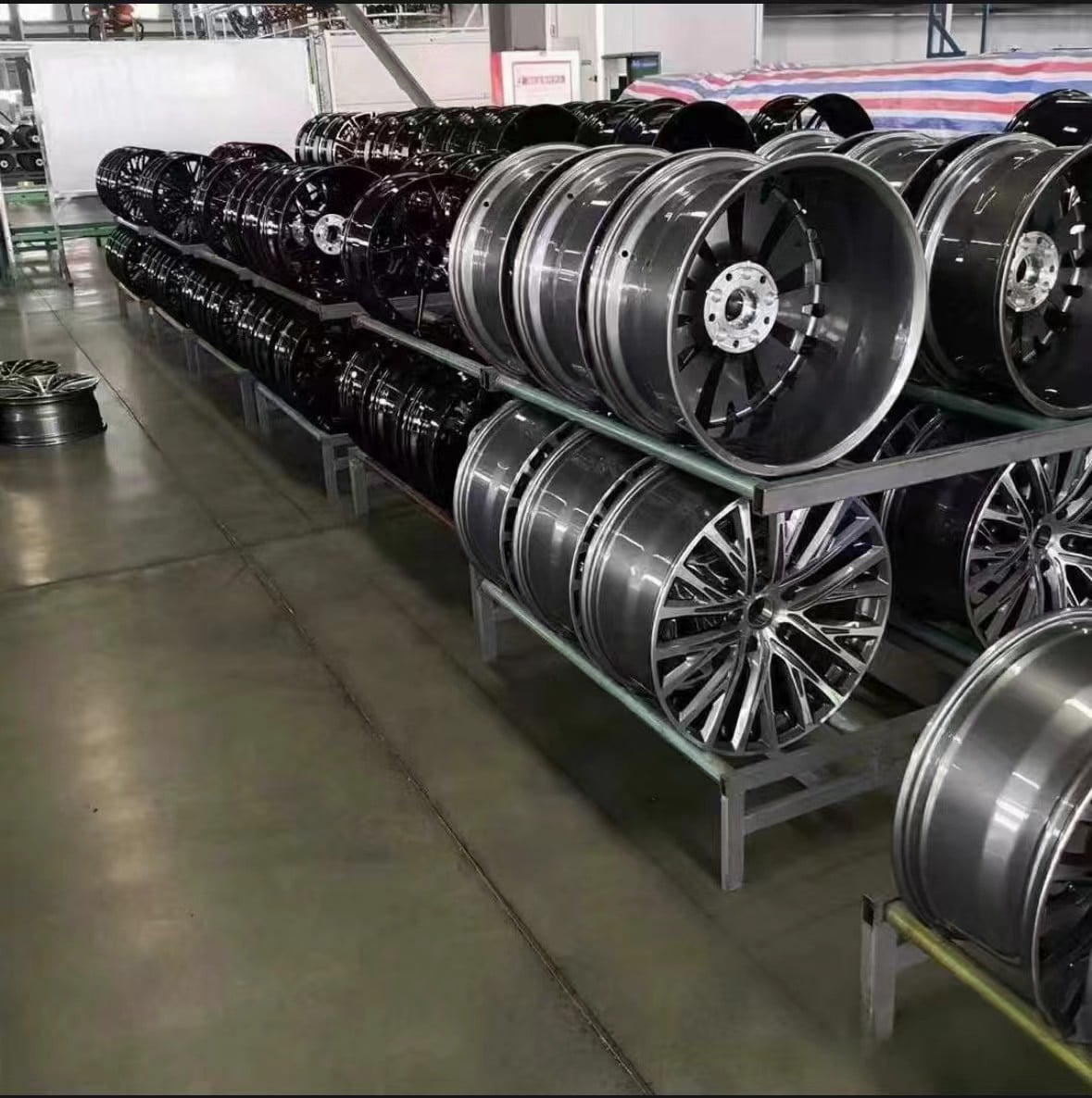
Why the staging desk is the first quality gate
Before a forged wheel reaches a press, a machining center or a packing line, the order has already passed through the first real control point: staging. That is the place where commercial information becomes production information and where a customer order is turned into a traceable batch.
If the warehouse cannot separate similar sizes, finishes and fitment codes, even a well-run factory will lose control later. A good staging routine protects the order from the very start by keeping the wheel model, surface finish, quantity, lot number and target vehicle together in one documented path.
This matters because alloy wheel production often contains many visually similar items. Two orders may share the same diameter, but differ in width, offset, center bore or finish. If the staging record is weak, the mistake may only become visible after machining or during packing, when the cost of correction is already high.
| Control point | What should be recorded | Why it matters to buyers |
|---|---|---|
| Order receipt | Model, size, finish, quantity, target vehicle | Defines the exact scope before production starts |
| Batch identity | Alloy lot, traveler number, release date | Keeps the job traceable through the whole route |
| Warehouse zone | Physical location and status label | Prevents close-looking orders from being mixed |
| Release check | Approved checklist and sign-off | Shows the batch was ready before the line received it |
How a strong inventory system prevents mix-ups
A disciplined warehouse does not only store wheels or blanks; it separates jobs by state. Incoming material, items waiting for inspection, and orders already approved for the next step should never live in the same visual zone. The cleaner the separation, the less chance there is of a half-finished job being released too early or an urgent order being overlooked.
For custom programs, this is especially important because buyers often order staggered widths, different offsets or special surface combinations. Those wheels can look close from a distance but behave very differently once they reach the machining program or the final packing list. A strong staging method ensures that the traveler and the physical stock always match.
The strongest factories also connect the warehouse record with the production route. That means the person who receives the work order can see what has already been approved, what still needs inspection and which line the batch should enter next. That is how inventory control becomes a practical manufacturing tool instead of a simple storage log.
Why staging must mirror the production route
A warehouse that looks tidy but does not mirror the production route can still create confusion. The reason is simple: the line does not think like a shelf. The line thinks in sequence, in order numbers, in batch splits, and in the physical availability of the next job. When the warehouse layout matches that logic, it becomes easier for the team to release the right job at the right time without opening every carton or checking every traveler twice.
For custom alloy wheel orders, staging is even more important because wheel variants often share the same basic diameter but differ in offset, center bore, spoke detail, surface finish or packaging method. A team can easily mistake one job for another if the labels are weak. The answer is not only better handwriting. The answer is a stronger workflow: clear batch zones, readable tags, visual status marks and a release record that follows the work order all the way to packing.
The best staging system also anticipates partial completion. Some jobs may be waiting for heat treatment, some may be waiting for CNC, and some may already be approved for packing while another line is still working on a different sequence. If those states are not visibly separated, the warehouse starts to behave like a mixing table instead of a control point.
| Common failure mode | Likely cause | Downstream result |
|---|---|---|
| Mixed order | Two similar jobs stored together | Wrong wheel may enter machining or packing |
| Label drift | Traveler and carton labels do not match | Receiving team loses confidence in the shipment |
| Old stock release | No FIFO or status control | Expired or unapproved material may be used |
| Priority confusion | Urgent and routine orders share the same zone | Production sequence becomes unstable |
What buyers should ask before a batch is released
Buyers do not need to stand inside the warehouse to judge whether staging is under control. They only need to ask for a clear chain of information: what the order is, where it sits, what batch number it carries, and what must happen before release. If the supplier can answer those questions without hesitation, the later process is usually much easier to trust.
A helpful follow-up question is how the factory protects identical-looking jobs. Many wheel orders can appear very close from the front, especially when the diameter and face style are similar. The supplier should be able to explain how the system separates them by batch, by rack location, by status and by carton identity. If that answer is vague, the buyer is seeing a storage space rather than a controlled staging process.
Staging also supports later quality actions. When a surface issue, size issue or packing claim appears, the factory should be able to trace the wheel back to the exact order, the exact lot and the exact route through the warehouse. This is why the earliest control point has a direct effect on customer confidence after delivery.
For international buyers, the last part matters just as much as the first. A stable staging system makes it easier to match packing lists, shipment photos and commercial documents, so the receiving team does not need to guess whether a carton set belongs to the same contract or to a different order.
Practical buyer questions
- How are batches separated when the same wheel design appears in different orders?
- What color or status system is used to mark hold, approved and packed stock?
- How does the warehouse confirm that carton labels still match the production traveler?
- What happens when one order is split across several production dates?
- Who signs the final release before the batch leaves staging?
- How are packing photos and shipment records tied to the batch identity?
Buyer checklist
- Ask for the traveler or batch label used on the floor.
- Confirm the alloy lot and the approved order specification.
- Check whether similar sizes are physically separated in storage.
- Request a release record before the batch goes to the next step.
- Verify that packing labels will later match the batch identity.