
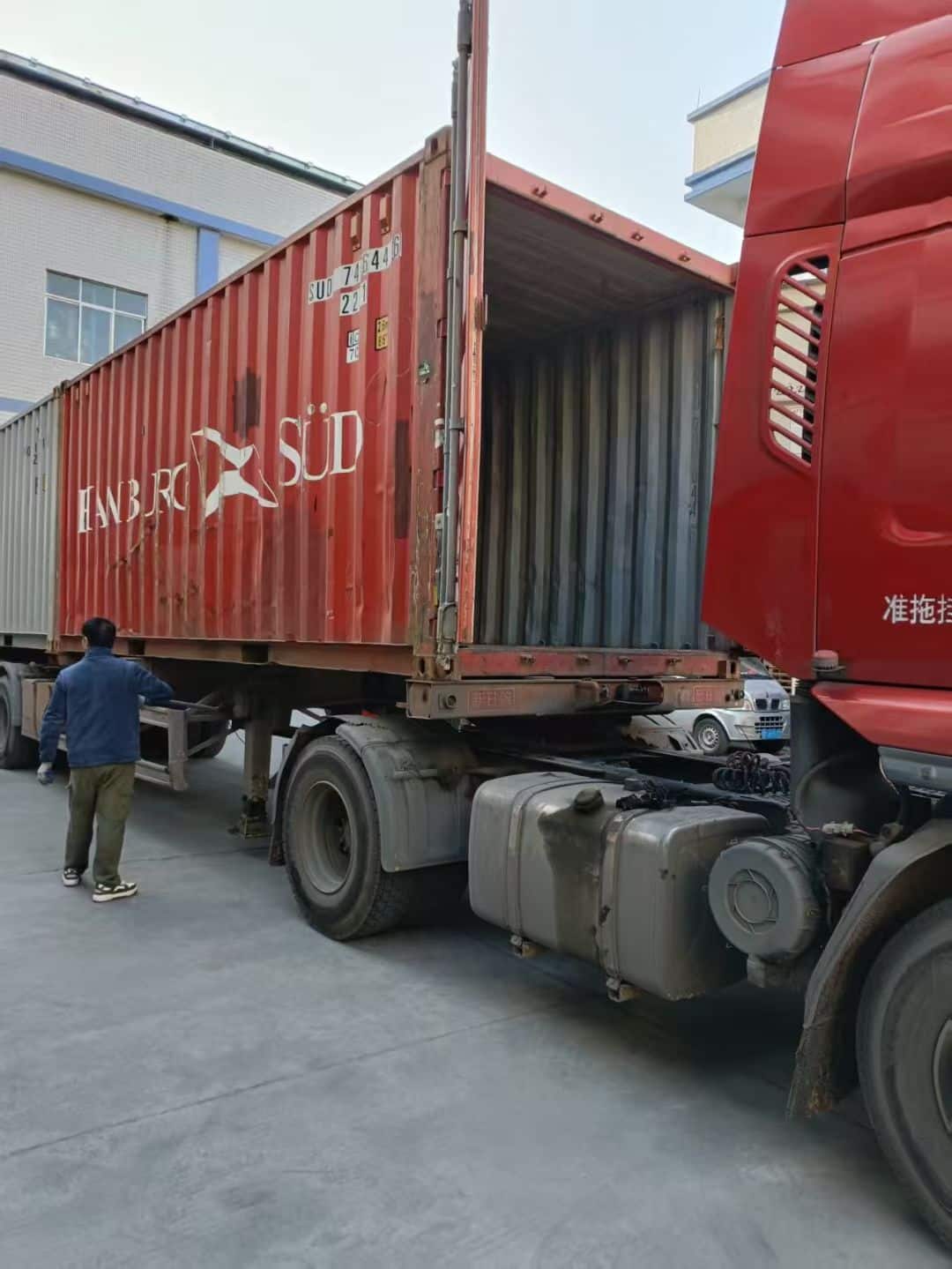
Why this step matters in alloy wheel production
Trailer Loading Sequence for Export Alloy Wheel Orders is not an isolated warehouse task. In a custom alloy wheel program, the same order may pass through material receiving, blank forming, heat treatment, CNC machining, surface preparation, final inspection, packing and export loading. Each step creates a chance to lose traceability if the factory only relies on appearance. A professional supplier treats the process as one controlled chain.
The practical value for buyers is simple: the wheel must look correct, fit the target vehicle and arrive with the same specification that was approved. Terms such as PCD, center bore and ET offset are not catalog decorations. PCD is the pitch circle diameter of the bolt holes, center bore is the hub location diameter, and ET offset describes the mounting face position relative to the wheel centerline. If any of these are mixed, the wheel may not install correctly even when the finish looks acceptable.
The local reference papers in the project folder discuss alloy wheel manufacturing, forming routes, product quality improvement, wheel balancing and heat-treatment behavior. A common conclusion is that a wheel cannot be judged only by final appearance. The process has to control material condition, forming stability, machining allowance, inspection frequency and shipment protection. Iscar Aluminum Wheels Brochure is especially relevant to this article because it connects production planning with measurable quality outcomes.
For forged or flow-formed wheel projects, material records should stay visible from the first receiving point to the final carton. Alloy family, heat condition and batch identity help the factory understand whether machining behavior, heat-treatment response and finish preparation are consistent. When a buyer orders repeated programs, this continuity also makes the next purchase easier to compare against the last one.
| Stage | Control method | Reason for customer value |
|---|---|---|
| Specification confirmation | Match size, width, PCD, center bore, ET offset, finish code and quantity against the order record. | Prevents a visually similar wheel from entering the wrong production or packing route. |
| Material or batch link | Keep material lot, work order and inspection traveler connected through receiving, machining, finishing and packing. | Makes corrective action and repeat-order consistency possible. |
| Handling control | Use rack separation, forklift route planning, carton orientation and protected staging surfaces. | Reduces impact marks, coating scratches, carton compression and re-sorting after delivery. |
| Final verification | Check packing list, carton label, photo record, shipment seal and buyer documentation before handover. | Supports receiving accuracy and makes export communication clearer. |
Process map for buyers
| Process question | Related technical item | What the customer should learn |
|---|---|---|
| What is being controlled? | billet traceability, forging temperature, T6 heat treatment, solution treatment | The article explains which physical characteristic is being protected. |
| How is it verified? | Traveler record, measurement, visual check, packing list and shipment photos | The supplier should have evidence, not only verbal assurance. |
| Where can the risk appear? | Receiving, forming, machining, finishing, staging, container loading | Quality risk can appear after production if handling is weak. |
| What supports repeat orders? | Stable batch identity, fitment data, finish code and export record | Repeatability is built from records as much as machines. |
Technical controls behind the visible factory process
The same thinking applies to CNC machining. A stable datum system allows the factory to machine bolt holes, center bore, mounting pad and decorative surfaces in a predictable sequence. If blanks are stored poorly, handled roughly or mixed between orders, the machining center may still cut accurately, but it can be cutting the wrong part for the wrong destination.
Inspection should be staged, not saved only for the last day. Dimensional checks, surface review, coating thickness measurement, runout inspection and packing checks each answer a different question. The buyer does not need every internal number, but the supplier should be able to explain which characteristic is checked, how it is checked and why it matters for road use or export handling.
Runout and balance deserve particular attention because they connect factory process to the driver's experience. Radial runout describes movement toward or away from the rotation axis, while lateral runout describes side-to-side movement. Dynamic balance control helps reduce vibration. These are not cosmetic checks; they are evidence that forming, machining, mounting surfaces and handling remained within a controlled process window.
- Material control: The incoming material record should identify alloy family, lot number and approved use. For aluminum wheel programs, material condition influences forging pressure, machining chips, heat-treatment response and surface preparation. A batch that is not separated early can create hidden variation later.
- Forming control: Forging or forming creates the basic mechanical structure. The factory should understand forming load, die or tooling condition, blank geometry and machining allowance. A visually clean blank can still be inefficient if the allowance is uneven or if the barrel profile has drifted.
- Heat-treatment control: Solution treatment and aging are used to stabilize mechanical properties in many aluminum wheel routes. The key issue is not simply reaching a high temperature; it is controlling time, temperature uniformity, transfer practice and batch consistency.
- Machining control: CNC machining defines the fitment interface. The center bore, PCD, mounting pad, offset surface and brake clearance area must be produced from a stable datum plan. Tool wear, fixture repeatability and chip evacuation all affect consistency.
- Inspection control: A disciplined supplier separates visual inspection from dimensional inspection. Appearance checks cannot replace PCD measurement, runout measurement or balance control. Each test answers a different risk question.
- Packing control: Export cartons, separators, labels and pallet patterns need the same discipline as machining. Packing should prevent direct surface contact, keep each specification identifiable and allow the customer to receive without unnecessary sorting.
Inspection points that should be documented
| Risk | Technical cause | Preventive control |
|---|---|---|
| Mixed specification | Similar wheel designs can share appearance while PCD, center bore or offset differ. | Separate by work order and mark racks or cartons before the next operation. |
| Runout complaint | Machining datums, mounting pad flatness or handling deformation can affect rotation. | Measure radial runout, lateral runout and dynamic balance on representative parts. |
| Finish damage | Clear coat or painted surfaces can be damaged by contact points and carton compression. | Use clean separators, stable pallet patterns and handling checks before loading. |
| Delayed receiving | Unclear labels or mixed cartons slow customer warehouse checks. | Use readable carton labels, packing lists and shipment photos tied to the order. |
Surface quality is also more than visual shine. Polishing, pretreatment, paint, powder coating or clear coat must create a finish that resists handling, packing pressure and normal road exposure. Coating thickness measurement, adhesion checks where required and visual standards help prevent a wheel from passing final inspection only to show marks after transport.
Export packing is often underestimated. A wheel can leave finishing in good condition and still arrive damaged if carton compression, pallet stability, forklift handling or container loading are weak. The factory should treat carton label accuracy, load distribution and shipment photo records as part of product quality, not as a separate shipping chore.
Buyer checklist before confirming a custom wheel order
| Buyer question | What a professional answer should include |
|---|---|
| How is this order separated from other orders? | The factory should explain the work-order number, staging zone, label format and release procedure. |
| How are fitment dimensions verified? | The answer should include PCD, center bore, ET offset, mounting pad flatness and runout inspection. |
| How is surface quality protected? | The supplier should describe coating checks, clear coat handling, rack spacing and carton protection. |
| What evidence is available before shipment? | A packing list, carton photos, loading photos and seal number should be available for export orders. |
A useful way to judge a supplier is to ask for the control logic instead of asking only for photos. The strongest answers explain how the order is identified, how the wheel is measured, how the surface is protected and how the shipment is verified. This gives customers a clearer view of production maturity and reduces risk before a deposit is placed.
Practical takeaway
A wheel production article should help customers understand what is controlled, why it is controlled and how that control protects fitment, finish and delivery. Trailer Loading Sequence for Export Alloy Wheel Orders shows that a professional alloy wheel supplier is not only selling a design. It is managing material records, forming stability, CNC accuracy, finish protection and export evidence as one production system.